
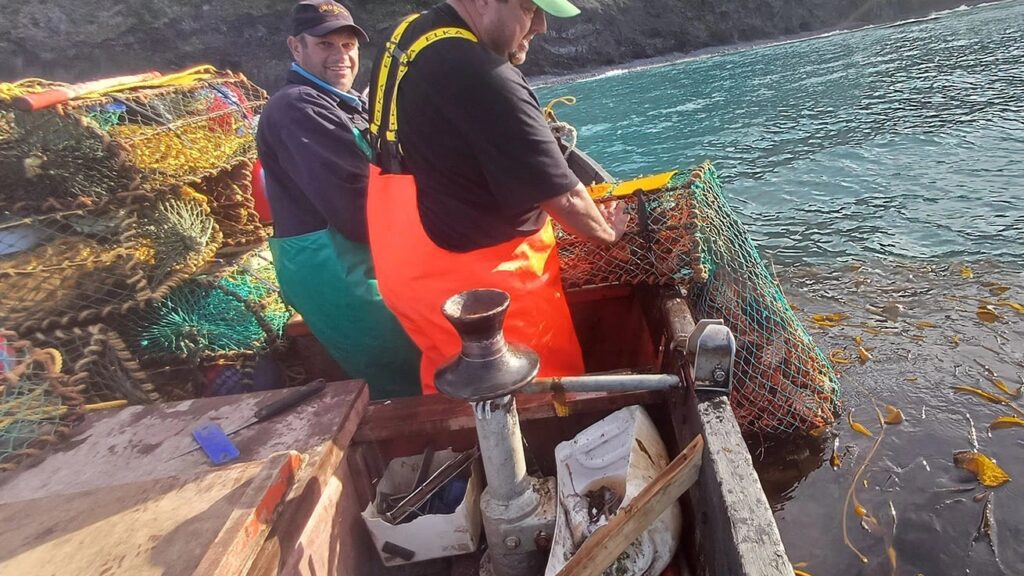
Out here in the middle of the South Atlantic, Tristan da Cunha is famous for many things: our rugged beauty, our community spirit, and, of course, our lobsters. The Tristan rock lobster (Jasus tristani) isn’t just a delicacy it’s part of our history, our economy, and our way of life.
Commercial lobster fishing began here in 1949, when the first canning factory was built above Big Beach. That factory was lost in the volcanic eruption of 1961, but when islanders returned home two years later, a new, modern freezing plant rose in its place. Through the decades, the fishery became the heartbeat of our economy, peaking at over 800 tonnes a year in the 1970s. Today, it is carefully managed at around 400 tonnes to protect future stocks.
This is no ordinary lobster. Our spiny lobster thrives only in Tristan’s cold, pristine waters. It’s prized by chefs around the world from Japan to the United States for its sweet, rich flavour.
The industry supports almost every household on the island and brings in around 80% of our external income. It’s also a point of pride: our fishery holds the marine Stewardship Council certification for sustainability, proving that we can share our natural bounty with the world while safeguarding it for generations to come.
These days, the fishery is run in partnership with Ovenstone Agencies in South Africa, operating under an exclusive agreement with the Tristan Government.
Every season, our small fleet of local boats works the waters around the islands, bringing in catches that are quickly processed, frozen, and shipped to global markets. All of this takes place within one of the world’s largest Marine Protected Areas proofs that even in one of the most remote places on Earth, sustainability is possible.
For us, lobster fishing isn’t just business it’s tradition, resilience, and a deep connection to the sea. It’s the story of how a small island community can thrive while protecting the natural treasures that make it unique.
Image credits to Deanne Rogers